

What are dental crowns?
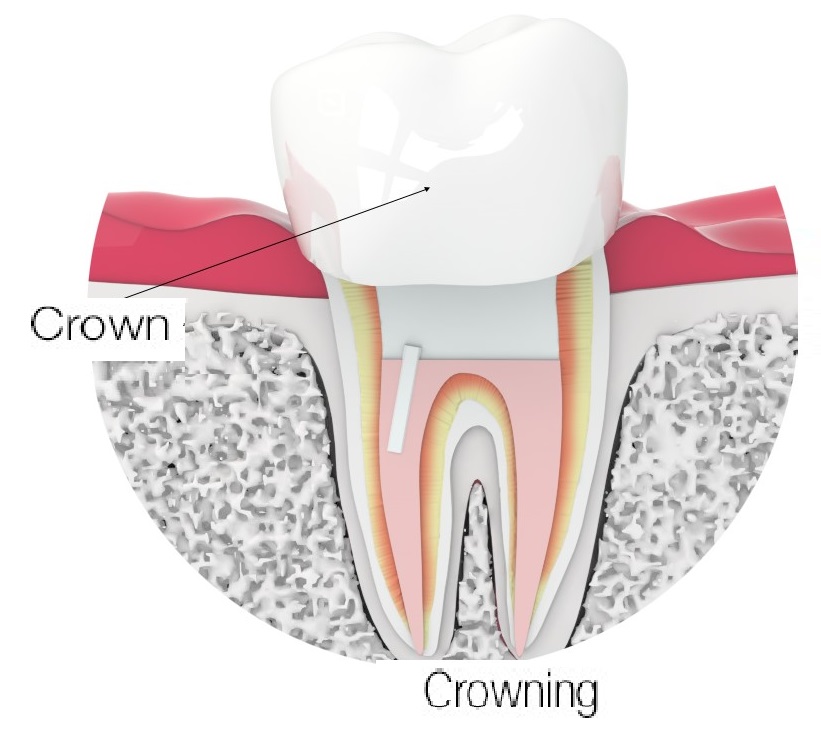
Dental crowns or ‘caps’ are made in dental labs and placed on freshly prepared teeth to restore their bite power. Crowns are made-to-order and custom fit by the dentist in the patient’s mouth. They’re used to protect, cover, and restore the shape of teeth when fillings can’t solve the problem. Dental crowns can be made of metals, porcelain, plastic resin, and ceramics and as such they typically don’t require any special care beyond good oral hygiene.
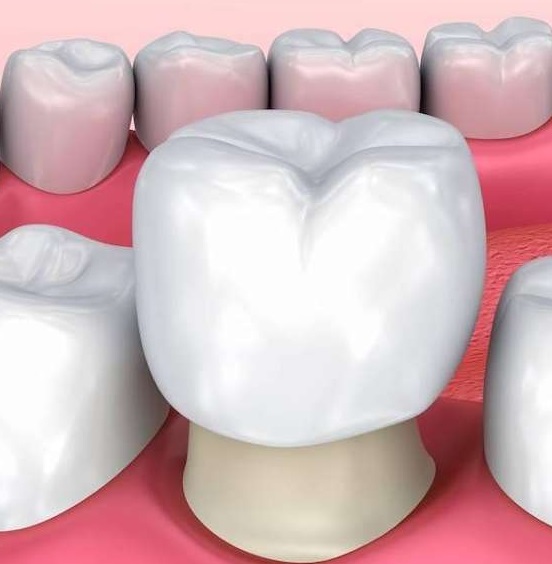
Dental Crowns at Archer Dental – The Process
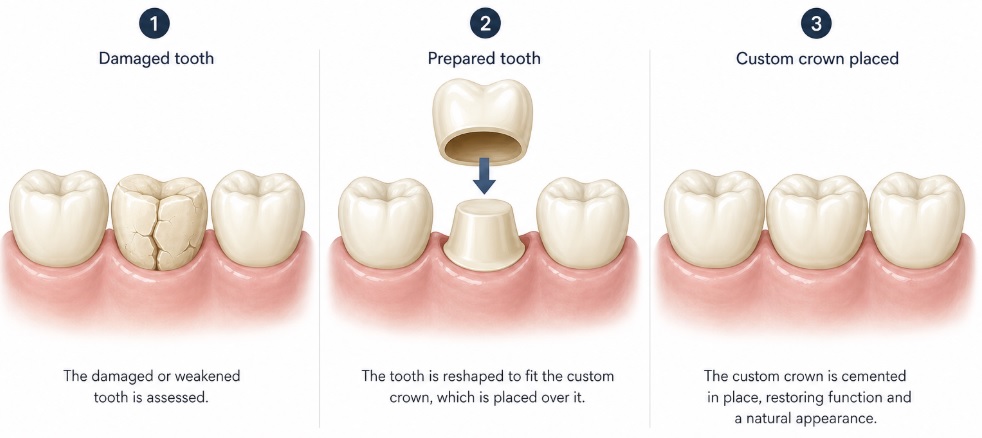
Restore strength, comfort, and confidence with a custom dental crown that fits your smile, your lifestyle, and your values. At Archer Dental, we offer several crown materials so you can choose the option that best balances aesthetics, durability, cost, and holistic considerations.
Choose your Crown at Archer Dental
Whether you need to protect a weakened tooth, complete a root canal, or upgrade an old restoration, our dentists will walk you through these main crown solutions:
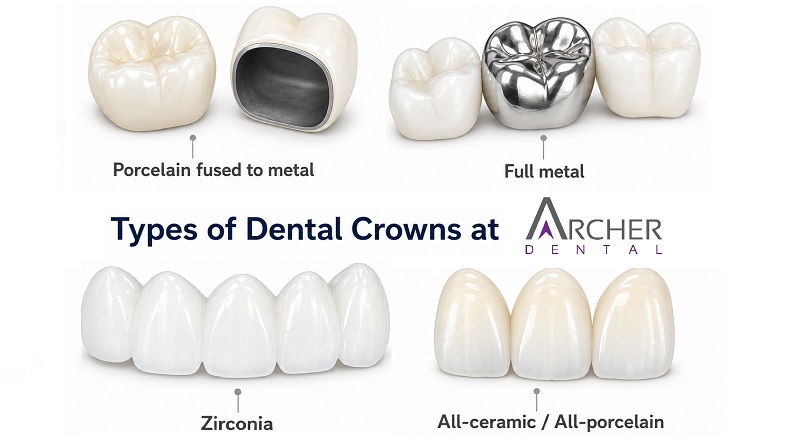
- All‑ceramic / all‑porcelain crowns
Metal‑free, highly aesthetic, and designed to blend seamlessly with surrounding teeth. These crowns are ideal if you want a natural look and are mindful of biocompatible, holistic materials. - Zirconia and other high‑strength ceramics
Advanced ceramics that combine a natural tooth‑like appearance with exceptional strength, making them a great choice for both front and back teeth under heavier biting forces. - Porcelain‑fused‑to‑metal (PFM) crowns
A proven option that pairs a strong metal base with a tooth‑colored porcelain exterior. PFM crowns provide reliable function and good aesthetics, and can be a practical choice for many patients. - Full‑metal (gold or other alloys) crowns
Time‑tested, extremely durable, and gentle on opposing teeth. While not tooth‑colored, metal crowns are often preferred for back molars where strength and longevity matter most. - Tooth‑colored resin / composite crowns (select cases)
Occasionally used as an interim or lower‑cost restorative solution. These crowns can offer good aesthetics in the short to medium term, but are generally less durable than ceramic or metal options.
At‑a‑Glance Crown Options
Below is a simple comparison to help you see how each material differs in everyday terms:
| Crown material | Aesthetics (natural look) | Durability & strength | Holistic / metal‑free focus | Typical cost level* |
|---|---|---|---|---|
| All‑ceramic / all‑porcelain | Excellent | High | Yes, metal‑free | $$$ |
| Zirconia / high‑strength ceramic | Very good–excellent | Very high | Yes, metal‑free | $$$ |
| Porcelain‑fused‑to‑metal (PFM) | Good | High | Partial (contains metal) | $$ |
| Full‑metal (gold/alloy) | Low (metal color) | Very high | Depends on alloy | $$$– |
| Resin / composite | Good initially | Moderate | Yes, metal‑free | $–$$ |
*Exact fees depend on the tooth, complexity, and your insurance coverage. We’ll provide a clear estimate before treatment.
A Holistic, Patient‑Centered Approach
For patients who prefer metal‑free or more holistic options, our team will prioritize ceramic and resin‑based materials where appropriate, and carefully review any use of metal alloys. Together, we’ll look at your health history, bite, cosmetic goals, and budget so your crown not only looks great, but also supports your overall well‑being for years to come.
If you tell me which one or two materials you’d like to emphasize most on the page (for example, metal‑free ceramics vs. everything else), I can tighten this copy further and tailor the tone to that focus.
Dental Crowns at Archer Dental Toronto Locations
Dental crowns are available and regularly prescribed, imaged, custom-made and applied at Archer Dental Rosedale, at Bloor and Sherbourne, and Archer Dental Little Italy on College Street, and at Archer Dental Baby Point at Annette and Jane Street. The same level of expertise and gentle care is provided at all three clinics, resulting in equally exceptional outcomes at all three locations.

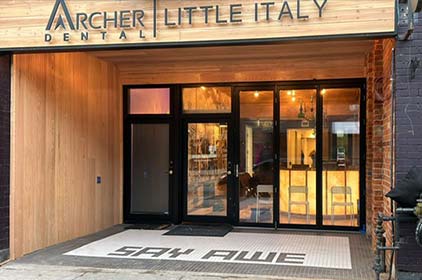

At each Archer Dental clinic, experienced dentists, dental hygienists, and dental assistants measure and apply dental crowns using modern equipment and techniques. Each clinic provides restorative consultations and treatment planning for repairing teeth and restoring bites.
FAQs – Frequently Asked Questions about Dental Crowns
- Are dental crowns dental implants?
- How long do dental crowns last?
- How is a dental crown fitted?
- How much does a dental crown cost?
- Does insurance cover dental crowns?
- How painful is it to get a crown?
- How to clean dental crowns?
- Can dental crowns get stained?
Are dental crowns considered implants?
No, dental crowns are not implants. Crowns and implants are two very different things. A dental crown is a cap that is made to be placed over an existing tooth and thus repair the tooth structure and make it functional. A dental implant, by contrast is a surgically added device that’s placed directly in the bone to replace a missing tooth, and this invariably has a dental crown placed on top to look and function like a normal tooth.
How long do dental crowns last?
Dental crowns, regardless of their composition, can last over a decade. The human mouth is a complicated mechanical system with many moving parts, and so there are many different factors that can affect the longevity of a dental crown. A patient’s oral hygiene and everyday habits, how they eat and sleep and their stress levels during the day and whether they wear a dental device at night to prevent grinding can all affect a crowns lifetime.
How is a dental crown fitted?
Dental crown procedures typically happen over a couple of appointments.
First, the dentist examines and prepares (or repairs) the tooth that requires the crown. This might involve taking X-rays of the tooth and it’s in this early phase when first impressions of the patient’s mouth are taken using ceramic molds.
Next, dentists at Archer Dental will file down and remove the outer layer of the tooth. Then another impression will be made of the trimmed tooth and the surrounding teeth. The dentist will place a temporary cap over the stump tooth to protect it in until the permanent crown is cemented.
During this waiting period, the dentist will send ceramic impressions of the patient’s teeth to a lab where they will fabricate the patient’s permanent dental crown. This step may take some time depending on market circumstances and the complexity of the task.
Once the crown has been created, and delivered to the dental office, the patient will be invited to return for the second visit so the dentist can cement the crown into position.
Cost of Dental Crowns in Toronto?
Archer Dental’s prices are in accordance with the Ontario Dental Association Fee Guide. The cost of a crown is $910 + lab fee (which usually is about $350) Please note, this is just an approximate price.
The true cost of dental crowns varies based on three factors: the materials that comprise the crown, the location of the tooth, and the size of the tooth all affect the price of the restoration. This procedure requires working with a 3rd party business, a dental lab who will create the crown the dentist cements into place. Esthetics are important and custom shading, choosing various types of materials i.e. zirconium or emax crowns or gold crowns affects the lab fees and the cost of creation. Archer Dental has excellent partners, and we use the most experienced dental labs who do beautiful work.
Does insurance cover dental crowns?
Yes, the majority of Canadian dental insurance policies offer partial coverage for dental crowns. Most insurance companies make coverage dependent on the reason for the procedure. If done for health reasons, then coverage is possible. But if the crown is placed for cosmetic reasons, insurance may not cover the expense. Quite often, even when the crown is medically necessary, the patient’s policy may only cover half the cost of the procedure, with the patient liable for the rest.
How painful is it to get a crown?
Receiving a dental crown should not cause the patient any more pain or discomfort than getting a typical filling. Dentists will ensure the patient receives numbing jelly on teeth and gums which desensitizes them and surrounding tissues. If more anesthetic is required, this will be injected and the patient might feel a small pinch.
How to clean dental crowns?
Regular brushing and flossing are the very best ways to maintain dental crowns and the teeth they protect. Patients who keep their mouths clean and healthy will have little trouble with their crowns. Cleaning between the teeth with floss is important if patients hope to keep plaque from damaging their new crowns and neighbouring teeth.
Can dental crowns become stained?
Depending on their composition, dental crowns can become stained. Zirconium crowns are more resistant to staining. Porcelain or ceramic crowns are less likely to be compromised than natural teeth, but they are not 100% resistant to the leading causes of tooth stains: coffee, red wine and smoking. Dental crowns can become yellow over time based on their material composition and patients’ oral health and hygiene.
Dental crowns replace missing teeth and can improve self-esteem and advance the patient’s ability to chew and speak properly. They also help maintain the shape of the patient’s face and alleviate the stress on other teeth.
Where can you get dental crowns in Toronto?
Dentists at all three Archer Dental clinics busily measure, create, and deploy dental bridges; you can get this service in the west end at Jane St. & Annette by visiting Archer Dental Baby Point, or at Archer Dental Little Italy at 583 College Street, or at Archer Dental Rosedale at Sherbourne & Bloor in Toronto.